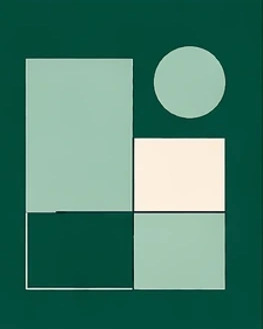
Swiss Design vs Neo-Brutalism: which style works best?
Two of the most influential design movements today are Swiss Design and Neo-Brutalism. Although they may appear completely different, both share a commitment to clarity and communication.
Swiss Design emerged during the 1950s and became famous for its use of grids, clean typography and structured layouts. Many corporate identities, magazines and information systems still rely on Swiss Design principles today.
Neo-Brutalism, on the other hand, deliberately breaks some of these rules. It embraces visual tension, asymmetry and bold experimentation.
Swiss Design: clarity, order and function
Swiss Design is known for discipline. It uses rational grid systems, clean sans-serif typography, generous white space and clear hierarchy. The goal is not decoration, but communication.
Designers such as Josef Müller-Brockmann helped establish many of the principles that continue to influence graphic design today. His poster designs show how rhythm, scale and alignment can create visual power without unnecessary ornament.
Swiss Design
- Grid systems
- Sans-serif typography
- Clear hierarchy
- Minimalist layouts
- Functional communication
Neo-Brutalism
- Large typography
- Unexpected compositions
- Bright colour combinations
- Hand-drawn elements
- Experimental layouts
Swiss Design is especially useful for editorial design, branding, information design, wayfinding, corporate identity and any project where clarity is essential.
Neo-Brutalism: tension, scale and visual confidence
Neo-Brutalism often includes large typography, unexpected compositions, bright colour combinations, hand-drawn elements and experimental layouts. It is less concerned with elegance and more interested in impact.
Where Swiss Design often feels calm and controlled, Neo-Brutalism can feel raw, direct and confrontational. It is frequently used in digital design, music posters, fashion campaigns, cultural platforms and creative websites.
Order
Grid
Clarity
Impact
Noise
Energy
Neo-Brutalism is not simply chaotic. The strongest examples still depend on hierarchy, contrast and composition. The difference is that the structure is often pushed, stretched or deliberately interrupted.
What can designers learn from both styles?
Studying both movements teaches valuable lessons. Swiss Design develops discipline and structure, while Neo-Brutalism encourages creativity and experimentation.
Alignment, spacing, grid logic and typographic clarity.
Scale, contrast, tension and expressive composition.
When to follow the rules and when to break them.
Students taking graphic design courses often begin with traditional design principles before exploring contemporary styles and trends. This gives them a strong foundation while also helping them develop a personal visual voice.
By understanding both approaches, designers become more versatile and capable of creating work for different audiences, industries and platforms.
Learning graphic design through structure and experimentation
A strong designer needs more than software skills. Photoshop, Illustrator and InDesign are important tools, but the real design decisions happen in composition, typography, hierarchy, colour and concept.
This is why structured training is valuable. In a course such as Graphic Design in English, students learn how to build layouts, work with typography and understand visual communication step by step.
For designers who want to explore contemporary tools and new visual workflows, the Design with AI course can add another layer of experimentation. AI can help generate visual directions, but the designer still needs taste, structure and critical judgement.
The best graphic designers know when to follow the rules and when to break them. Swiss Design gives you the grid. Neo-Brutalism gives you permission to challenge it.